
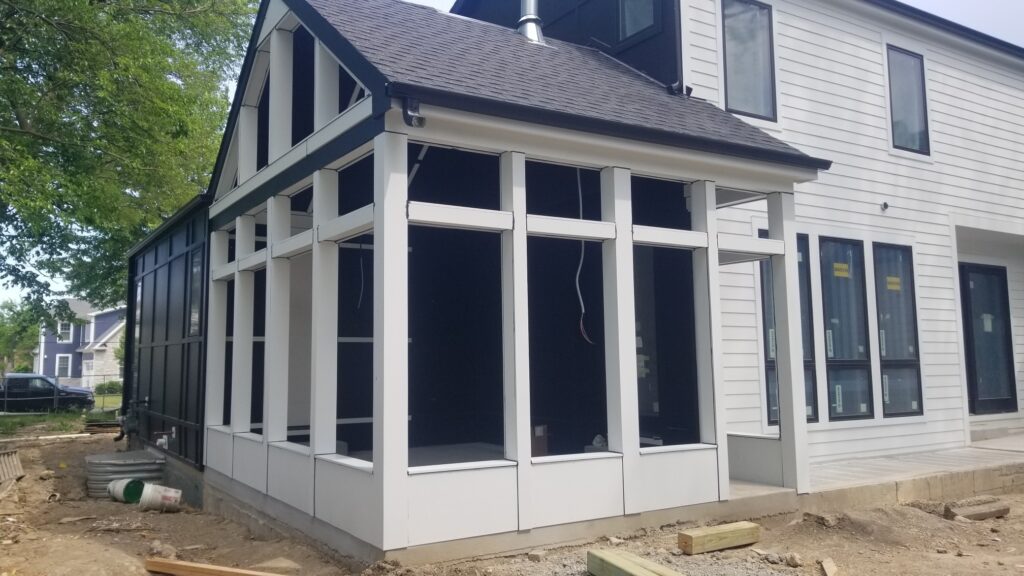
Northern Illinois roofs face hot summers, freezing winters, heavy snow, hail, wind, and repeated freeze-thaw cycles. These conditions can expose weak points and accelerate normal aging. Routine inspections help homeowners address trouble early.
Ice Dams
Heat escaping into the attic can melt snow on the roof. Water refreezes near cold eaves, forming a dam that pushes moisture under shingles. Balanced insulation, air sealing, and ventilation are important parts of prevention.
Wind-Damaged Shingles
Strong gusts may lift tabs, break adhesive seals, crease shingles, or remove them. Damage often begins at edges and ridges but can occur around vents and roof penetrations.
Hail Damage
Hail can bruise asphalt, knock away protective granules, crack shingles, and dent soft metals. Damage may not leak immediately, so a post-storm inspection is valuable.
Flashing and Sealant Failures
Flashing protects transitions around chimneys, walls, valleys, skylights, and vents. Corrosion, movement, poor installation, or deteriorated sealant can create concentrated leaks.
Clogged Gutters and Drainage Issues
Leaves, roof granules, and ice can prevent water from draining. Overflow may affect fascia, soffits, siding, foundations, and landscaping. Gutters should be cleaned and checked for proper slope.
Poor Attic Ventilation
Inadequate airflow can trap heat and moisture, contributing to condensation, mold, ice dams, and shortened shingle life. Intake and exhaust vents must work together.
Aging or Damaged Roof Decking
Long-term leaks can soften or rot sheathing. Sagging areas, repeated leaks, or a spongy roof surface require professional attention.
Protect Your Northern Illinois Roof
Check the attic and ceilings after storms, keep gutters clear, trim dangerous branches, and schedule periodic professional inspections. V&V Exteriors & Remodeling Co. can identify common roofing problems and recommend practical repairs or replacement. Contact us to schedule an evaluation.