
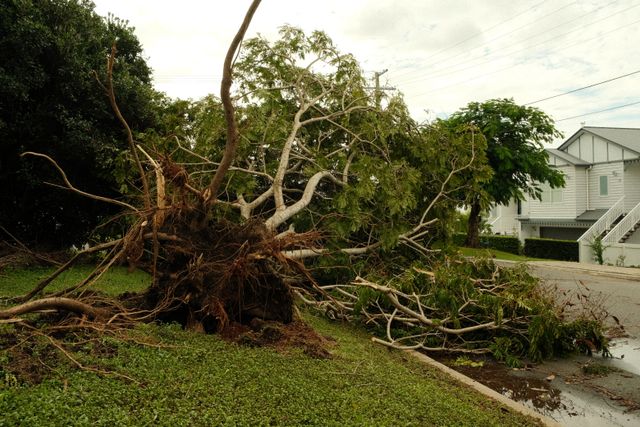
High winds can damage a roof without leaving shingles scattered across the yard. Lifted seals, loosened flashing, and small punctures may be difficult to see from the ground, yet they can allow moisture into the roofing system during the next rain.
Wind Damage Is Often Hidden
Wind pressure is strongest along roof edges, ridges, corners, and areas around vents or chimneys. Shingles may lift and settle back down after their adhesive seal has broken. Creases can form across tabs, fasteners can loosen, and flashing can pull away.
Small Problems Can Become Expensive
Once water reaches underlayment or decking, it may wet insulation, stain ceilings, encourage mold growth, or rot structural wood. An early repair is usually simpler than correcting damage after repeated storms.
What a Professional Inspection Covers
- Missing, lifted, creased, or torn shingles
- Ridge caps, roof edges, valleys, and flashing
- Vents, skylights, chimneys, and pipe boots
- Gutters, downspouts, fascia, and soffits
- Attic moisture, daylight, and ventilation concerns
- Signs of impact from fallen limbs or debris
When to Schedule an Inspection
Arrange an inspection after a severe wind event, when neighboring homes show damage, or whenever you notice loose materials, unusual roof sounds, ceiling stains, or debris in the gutters. It is also wise to inspect an older roof after major weather even when there is no visible leak.
What to Do Until the Inspection
Stay off the roof and photograph visible conditions from a safe location. Move belongings away from active leaks and use indoor containers if needed. Do not attempt permanent repairs without understanding the extent of the damage.
Protect Your Northern Illinois Home
V&V Exteriors & Remodeling Co. provides professional roof inspections for homeowners affected by high winds. Contact our team for a clear assessment and practical repair recommendations.